Robert Duvall's Breakthrough: How Boo Radley Launched His Career
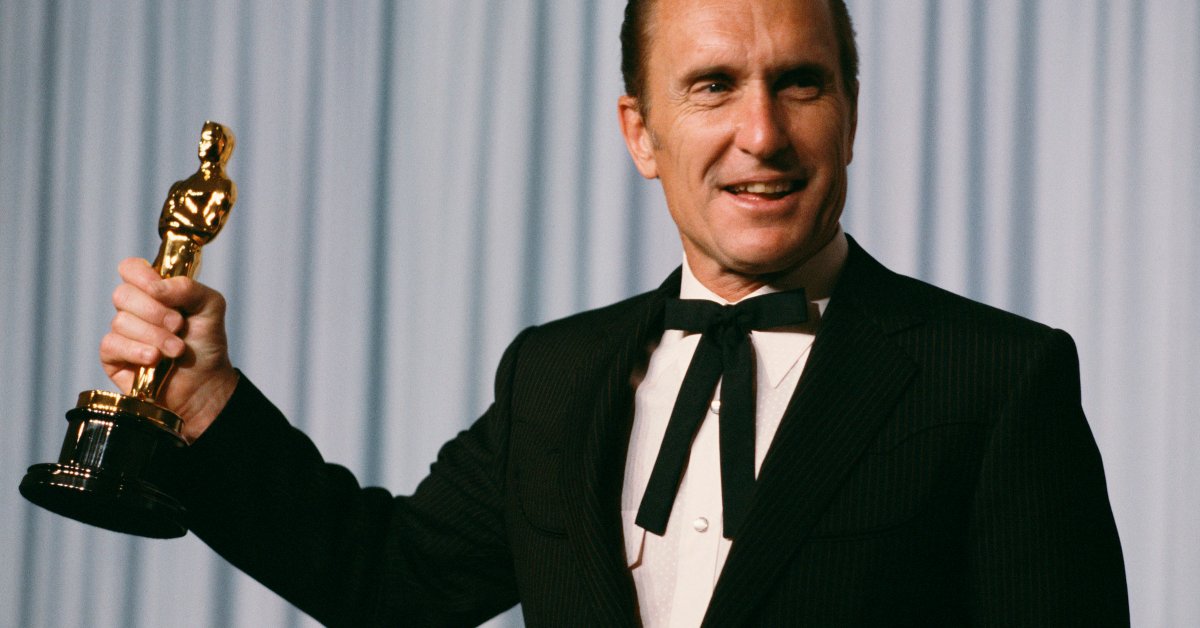
Before he was the ruthless consigliere Tom Hagen in *The Godfather*, the manic Lieutenant Colonel Bill Kilgore in *Apocalypse Now*, or the complex country singer Mac Sledge in *Tender Mercies*, Robert Duvall was a young, struggling actor making ends meet with day jobs and stage roles. While his prolific career would eventually span seven decades and garner him an Academy Award, six other nominations, and countless accolades, the pivotal moment that truly opened the doors to a storied film career arrived in 1962. It was then that a relatively unknown
Robert Duvall, young and eager, delivered a silent, yet profoundly impactful, performance as the reclusive Arthur "Boo" Radley in the cinematic adaptation of Harper Lee's beloved novel, *To Kill a Mockingbird*. This was not just a role; it was a revelation, showcasing a raw talent that Hollywood could no longer ignore.
The Formative Years: A Young Actor's Foundation
Born Robert Selden Duvall on January 5, 1931, in sunny San Diego, California, his early life was far from the glamour of Hollywood. The son of Navy Rear Admiral William Howard Duvall and amateur actress Mildred Virginia Duvall (née Hart), his childhood was marked by movement, often residing in Annapolis, Maryland, where his father's military career took them. Despite this transient upbringing, a passion for performance began to stir within him.
Duvall pursued this burgeoning interest by enrolling at Principia College in Elsah, Illinois, where he earned a bachelor's degree in drama in 1953. His path, however, took a brief detour through patriotic service. After graduation, he served a year in the U.S. Army, a formative experience that, while seemingly unrelated to acting, contributed to his disciplined approach to his craft.
Returning from his military service in 1955,
Robert Duvall, young and determined, made the quintessential move to New York City. There, he embarked on intensive training at the prestigious Neighborhood Playhouse School of the Theatre, studying under the legendary acting teacher Sanford Meisner. This period was transformative, not only for the rigorous instruction he received but also for the company he kept. It was within these hallowed halls that Duvall forged friendships with future acting titans Dustin Hoffman and Gene Hackman, even sharing an apartment with Hoffman during their struggling years. This environment of shared ambition, talent, and struggle fueled their collective drive. Duvall himself candidly admitted in a 1977 interview with PEOPLE, "I was terrible at everything but acting — I could barely get through school." This singular focus underscored his dedication to his chosen path. For a deeper dive into his early life and how these friendships shaped his journey, explore our related article:
Young Robert Duvall: From Army to Acting School with Future Stars.
From Stage to Screen: The Path to Maycomb
The road to film stardom was anything but direct for
Robert Duvall young in his career. For much of the 1950s, he honed his skills on the bustling New York stage, performing in various plays and soaking in the rich theatrical culture. To support himself during these lean years, he took on an array of day jobs, including stints at Macy's and the post office – a common rite of passage for many aspiring actors.
His transition to screen acting began with television. His first credited TV role arrived in 1959 in an episode of the anthology series *Armstrong Circle Theater*. Throughout the late '50s and into the early '60s, Duvall became a familiar face in one-episode guest appearances across popular anthology series like *The Twilight Zone*, the gripping police procedural *Naked City*, and the crime drama *The Fugitive*. These roles, though often small, provided invaluable experience in front of the camera, allowing him to experiment with different characters and hone his presence for a new medium.
A critical connection forged during his stage days would prove instrumental in his film career. Meisner had cast Duvall in a play titled "The Midnight Caller," written by the celebrated playwright Horton Foote. This collaboration blossomed into a significant professional relationship. It was Foote's wife who ultimately recommended Duvall for a unique and challenging role that would forever change the trajectory of his career. Discover more about his foundational years before achieving widespread recognition:
Before the Oscars: Robert Duvall's Formative Years and Early Roles.
Becoming Boo Radley: A Silent Performance That Spoke Volumes
The role that provided
Robert Duvall, young in his film career, with his first major cinematic opportunity was the enigmatic Arthur "Boo" Radley in the 1962 film adaptation of *To Kill a Mockingbird*. This wasn't his absolute *first* appearance on screen – he had a minor, uncredited role as an MP in *Somebody Up There Likes Me* (1956) – but Boo Radley was his true debut in a significant, credited character.
Playing Boo Radley presented a unique acting challenge. The character is central to the novel's themes of prejudice, innocence, and understanding, yet he has virtually no dialogue. His presence is felt through whispers, rumors, and the profound impact he has on the lives of Scout, Jem, and Dill. For Duvall, this meant conveying a complex inner world – fear, kindness, loneliness, heroism – solely through physicality, facial expressions, and the haunted vulnerability in his eyes.
Duvall immersed himself in the character, working to capture the essence of the misunderstood town outcast. His brief, yet powerful, scenes opposite Gregory Peck's Atticus Finch and Mary Badham's Scout are etched into cinematic history. The moment Boo emerges from the shadows to protect the Finch children, and Scout finally meets him face-to-face, is a masterclass in subtle, emotive acting. Duvall's ability to imbue the character with such profound humanity, without uttering a single line, demonstrated an extraordinary command of his craft. Critics and audiences alike were captivated by his portrayal, recognizing an undeniable talent even in this brief, silent turn. It was a testament to his Meisner training, which emphasizes truthfulness and spontaneous emotional connection, allowing him to project a character's soul without words.
Beyond Maycomb: The Doors Opened
The critical acclaim garnered by *To Kill a Mockingbird* and Duvall's unforgettable portrayal of Boo Radley proved to be the catalyst his nascent film career needed. The role demonstrated his versatility and ability to inhabit complex characters, paving the way for a steady stream of film opportunities that would follow.
No longer confined to episodic television or minor parts,
Robert Duvall, young but now recognized, began to land more substantial roles alongside Hollywood's biggest stars. He appeared in the 1966 drama *The Chase*, sharing the screen with an ensemble cast that included legends like Marlon Brando, Jane Fonda, and Robert Redford. The late 1960s saw him further solidify his presence with roles in films like 1969's *True Grit*, where he memorably played the heavy who is shot by John Wayne, and Robert Altman's *Countdown* (1967) and Francis Ford Coppola's *The Rain People* (1969), both co-starring James Caan.
By 1970, he was creating indelible characters, originating the role of the beleaguered Major Frank Burns in Robert Altman's groundbreaking Korean War comedy *M*A*S*H*, before starring as the titular lead in George Lucas' directorial debut, *THX 1138* (1971). While *The Godfather* (1972) would ultimately be his true "career breakthrough" in terms of Oscar recognition and A-list stardom, it was *To Kill a Mockingbird* that fundamentally launched him into the world of major motion pictures, showcasing his profound ability to transform into a character and opening the vital doors to these subsequent, increasingly prominent roles.
Conclusion
Robert Duvall's journey from a young drama student and stage actor to a Hollywood legend is a testament to talent, persistence, and the power of a single, transformative role. While his resume is now packed with iconic performances, it was his quiet, powerful portrayal of Boo Radley in *To Kill a Mockingbird* that truly launched his cinematic career. This role, demanding immense subtlety and emotional depth without dialogue, perfectly showcased the innate gifts of
Robert Duvall, young and hungry, solidifying his place as an actor of extraordinary calibre. It proved that sometimes, the most profound performances are those delivered in silence, leaving an indelible mark that resonates for generations. His career trajectory highlights the importance of every opportunity, no matter how brief, in building a legacy that endures.